
-
Jeff Koons Sued For Copyright Infringement, Again
01/10/2016
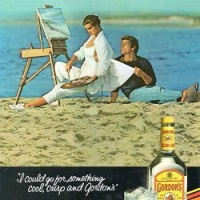 Famed “appropriation artist” Jeff Koons was sued in federal court last month over his alleged copyright infringement of a photograph used in a 1986 liquor advertisement. Koons is no stranger to litigation, having been sued on several different occasions for his appropriation art. The results of those suits have been mixed. For example, one of his works, “String of Puppies,” in which he created a sculpture based on a photograph without permission from the photographer, became the subject of an important court decision when the Second Circuit rejected Koons’s argument that his copying of the photograph was protected by the fair-use doctrine.
 -
Following Summary Judgment Defeat, Knoedler Defendants Settle With Another Group of Plaintiffs
12/24/2015
 This blog has written often about the Knoedler scandal, which exploded in 2011 when a once-venerable art gallery closed following revelations that, over the course of more than a decade, it had sold about $60 million worth of artworks—purported to be by Pollock, Motherwell, Rothko, de Kooning, and other giants of the Abstract Expressionist movement—that later turned out to be forgeries. Our previous posts contain more detail, but in short, the works all came to Knoedler through a Long Island art dealer, Glafira Rosales, who claimed to represent an anonymous collector liquidating a collection of previously-unknown masterworks. It turned out that the seller was a fiction, and the works were actually created by a little-known artist in Queens at the behest of Rosales (who in 2013 pled guilty to a litany of federal crimes).
 -
Second Circuit Rejects Art Authenticator Peter Paul Biro’s Appeal
12/16/2015
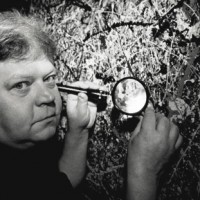 Back in 2013, this blog covered the dismissal of a libel case against the New Yorker over its portrayal of an art authenticator. The Second Circuit has now affirmed that decision, signaling the likely end of this dispute—even as the art world continues to struggle with the complex problem of authentication.
 -
Second Circuit Affirms Dismissal of Collectors’ Claims Against Keith Haring Foundation
12/10/2015
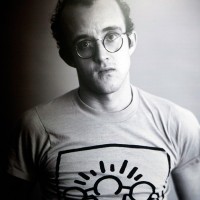 This blog has previously covered the case of Bilinski v. Keith Haring Foundation, Inc., a federal lawsuit filed last year in the Southern District of New York. Collectors of artworks they believe to be by famed artist Keith Haring, sued the artist’s foundation claiming that it had improperly denied authentication, thereby damaging the value of their holdings. This past spring, a federal judge dismissed the plaintiffs’ claims in a decision that explored some of the complex legal issues posed by artist foundations and authentication boards. The Second Circuit has now affirmed that ruling.
 -
In New Lawsuit, Heirs of Dachau Victim Seek Return of Two Schiele Works
12/09/2015
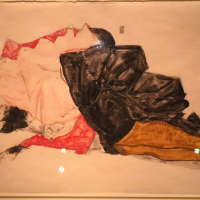 Around this time last year, our blog wrote about the history of two works by Austrian Expressionist Egon Schiele. Both were once owned by Fritz Grünbaum, a Jewish Austrian cabaret performer and art collector who was imprisoned by the Nazis in 1938 and died in Dachau in 1941; it’s unclear what happened to his art during and immediately after World War II, but a handful of the works have surfaced over the years since, sometimes leading to competing claims of ownership.ATTORNEY: Kate Lucas
CATEGORIES: Art Market, Fine Art, Legal Developments, Nazi-looted Art, Provenance -
Suit Against Apple Over “Demo Library” Photos Illustrates Importance of Clear Releases
12/07/2015A recent case against tech giant Apple, Inc. provides important reminders about commercial use of photographs. The plaintiff in the case, Abbey Dykhouse, alleges that in September 2010, a photographer (Della Marie Huff, a freelance photographer, an Apple employee, and a friend of Dykhouse) had taken photographs of Dykhouse and her puppy, Stitch. Huff later emailed Dykhouse, asking if Apple could use “a few of those photos of Stitch” in “demo libraries,” which are sample photo collections used to demonstrate Apple products at Apple retail stores. Dykhouse subsequently executed an Apple release form which contemplated the use of photos for one year. Three years later, though, Dykhouse learned that Apple was not only still including images of Stitch in demo libraries, but it was also using images that showed Dykhouse herself.
-
In Case Over “Point Break” Spoof, Second Circuit Rules That Copyright Protects Sufficiently Original Fair Use Parodies
11/09/2015
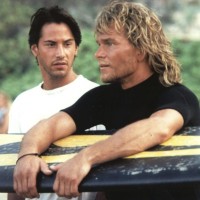 The Second Circuit has issued another important decision in the arena of copyright and fair use. The ruling clarifies that, where the creator of a parody makes fair use of another work and adds sufficient originality of her own, she may claim copyright protection over the original components of the parody.
 -
Ninth Circuit Explores Copyright’s “Idea/Expression Dichotomy”
10/30/2015
 Federal courts continue to grapple with the complex question of when a defendant may successfully invoke the fair-use doctrine as a defense against copyright-infringement claims. Fair use is a hot topic in copyright law these days, and it has prompted some high-profile litigation and some important recent decisions in the appellate courts.
 -
Second Circuit Affirms “Fair Use” Holding In Authors’ Suit Over Google Books
10/29/2015Nearly two years ago, we wrote on this blog about the Southern District of New York’s decision ruling that the Google Books Library Project was protected by the fair use doctrine. Earlier this month, the Second Circuit affirmed that decision, in what may well turn out to be the final word on the legality of Google’s ambitious project. In practical terms, this decision means that for now, after more than a decade of litigation, Google Books is legally in the clear.
-
Controversy Over Jewish Archives Continues, As Court Enters $43.7 Million Interim Judgment Against Russia
09/28/2015Back in 2013, this blog discussed the ongoing litigation—and resulting international controversy—over a famous collection of religious books and manuscripts related to the heritage of Chabad-Lubovitch, a Hasidic Jewish organization founded in Russia and now based in New York. The Russian government, who has control of the collection, has refused to participate in the litigation. This month, the matter took on new weight as a federal court granted the Chabad-Lubovitch claimants’ request for an interim judgment against the Russian government—to the tune of over $40 million.
-
Ninth Circuit Upholds Copyright Protection for Batmobile
09/28/2015
 Last week, the Ninth Circuit Court of Appeals waded into comic-book history and took an in-depth look at what makes a protectable “character” for purposes of copyright law. The court sided with DC Comics, the owner of the copyright in comic-book crime-fighter Batman, in a case focusing on the caped crusader’s signature vehicle, the Batmobile.
 -
Three New Cases to Watch in the World of Graffiti Art
09/15/2015
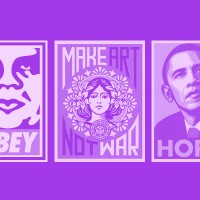 As the interest in graffiti art has grown, so too have discussions in artistic and legal circles—including in the courts. Graffiti was back in the news this summer, highlighted by an interesting trio of court cases involving various issues impacting this unique body of art.
 -
In Lawsuit Against Pinterest, Artist Continues a Crusade for Copyright on the Internet
07/23/2015
 This blog has covered many examples of the challenges faced by artists in the internet age, from the potential implications for Etsy when its vendors sell counterfeit or infringing products, to the risk that work by independent artists can be swiped and mass-produced for major retailers, to the debate over artist Richard Prince’s appropriation of Instagram snaps. A recent lawsuit by photographer Christopher Boffoli seeks to hold Internet phenomenon Pinterest accountable when it fails to remove copyrighted material from its platform.
 -
New York Court Dismisses Art-Related Claims Based on Statute of Frauds
07/13/2015
 A recent dismissal in New York State Supreme Court, New York County Commercial Division highlights the importance of written contracts in high-value art transactions. Last week, Justice Shirley Werner Kornreich granted summary judgment to defendants in a case brought by an art and antique dealer, Alexander Komolov, against his former business partners, alleging that they: (1) sold him several artworks that turned out to be fakes; (2) stole works by Pablo Picasso and Maurice de Vlaminck; and (3) breached an agreement to pay him for a condominium in New York City. See Komolov v. Segal, Index No. 651626/2011
 -
District Court Rules Against Claimants To a Pissarro Work Looted By Nazis
07/06/2015
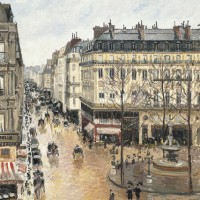 This blog has covered many recent stories involving Nazi-looted artworks. In early June, the U.S. District Court for the Central District of California ruled on the choice of law to be applied to one such dispute, and in the process dealt a blow to the claimants who were seeking the return of a long-lost artwork. The case highlights the difficulty of litigating these disputes that not only span decades of time, but also cross borders, jurisdictions, and legal regimes.
 -
Disclaimer By Artist Cady Noland Sparks Another Lawsuit
06/30/2015
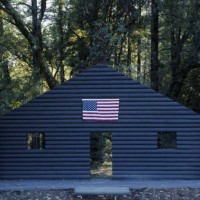 Conceptual sculptor and artist Cady Noland’s works have garnered international acclaim and set records at auction. She has also, however, received attention for her complex and sometimes-fraught relationship with her past works. Last fall, she pointedly refused to endorse a show containing some of her work, and she has in the past expressed her concerns with how her creations are installed, maintained, exhibited, and sold on the secondary market. Her vigorous oversight of works has even resulted in litigation. Last week, her purported disavowal of one of her works that had been restored without her permission sparked a new lawsuit, and raised more questions about the scope of an artist’s right to disclaim authorship of her own works.
 -
Richard Prince’s Instagram Exhibit Raises Eyebrows and Fair Use Questions
06/12/2015
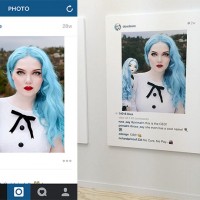 Famed “appropriation artist” Richard Prince has spent much of his career testing the boundaries of fair use. He was the defendant in the high-profile case of Cariou v. Prince, which revolved around a 2008 exhibit at the Gagosian Gallery called “Canal Zone,” in which Prince extensively appropriated works from Yes Rasta, a book of works by photographer Patrick Cariou. Cariou’s ensuing copyright-infringement lawsuit culminated in a 2013 Second Circuit opinion, which held that the majority of Prince’s works constituted fair use of Cariou’s photographs under federal copyright law.
 -
One of the First Restituted Works from Gurlitt Collection to be Sold
05/29/2015
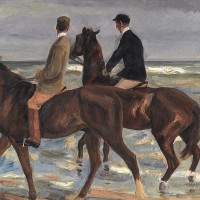 This blog has previously covered the twisting tale of the Gurlitt Collection, a cache of hundreds of artworks discovered in Germany and Austria a few years ago in the possession of Cornelius Gurlitt, the son of an art dealer authorized by the Nazis to deal in art confiscated, looted, or deemed “degenerate art” by Hitler’s regime. The art world has fiercely debated the best way to handle the collection, a daunting task that was further complicated when Gurlitt himself died last May and bequeathed his entire estate to the Kunstmuseum Bern in Switzerland.
 -
Suit Over Nazi-Confiscated Pissarro Painting Heads from New York to Oklahoma, As Oklahoma Legislators Put Pressure on University
05/27/2015
 Recent months have seen interesting developments in a federal lawsuit against the University of Oklahoma to recover an allegedly Nazi-looted painting by famed Expressionist Camille Pissarro. 75-year-old Leone Meyer claims that Nazis stole the painting, Pissarro’s “La Bergère Rentrent des Moutons” (“Shepherdess Bringing in Sheep”), from her family during World War II. The Jewish family owned a significant stake in Galeries Lafayette (a high-end Paris department store) and had an extensive art collection.
 -
Etsy Faces Class Action over Alleged Concealment of Copyright and Trademark Issues
05/19/2015
 Shareholders filed a class-action suit against online marketplace Etsy last week for allegedly failing to disclose in its initial public offering documents that millions of items for sale on the site were either counterfeit or potentially infringing trademarks and copyrights. Etsy is a peer-to-peer e-commence website that allows artists to create their own stores and sell their creations for a small listing fee and a percentage of their sales revenue. It provides an important platform for artisans without the following or the means to market and sell their works independently.
Art Law Blog