
-
University of Oklahoma Reaches Settlement With Claimant Over Nazi-Confiscated Pissarro Painting
04/01/2016
 After a long legal battle in multiple federal courts, the University of Oklahoma has reached a settlement regarding a claimant’s attempts to recover a Nazi-looted artwork by celebrated Expressionist painter Camille Pissarro.
We have previously written about this case, which involves a claim by 75-year-old Leone Meyer, who says that the painting, La Bergère Rentrent des Moutons (“Shepherdess Bringing in Sheep”), was stolen from her family by the Nazi regime during World War II. -
District Court Rules Against Claimants To a Pissarro Work Looted By Nazis
07/06/2015
 This blog has covered many recent stories involving Nazi-looted artworks. In early June, the U.S. District Court for the Central District of California ruled on the choice of law to be applied to one such dispute, and in the process dealt a blow to the claimants who were seeking the return of a long-lost artwork. The case highlights the difficulty of litigating these disputes that not only span decades of time, but also cross borders, jurisdictions, and legal regimes.
-
Suit Over Nazi-Confiscated Pissarro Painting Heads from New York to Oklahoma, As Oklahoma Legislators Put Pressure on University
05/27/2015
 Recent months have seen interesting developments in a federal lawsuit against the University of Oklahoma to recover an allegedly Nazi-looted painting by famed Expressionist Camille Pissarro. 75-year-old Leone Meyer claims that Nazis stole the painting, Pissarro’s “La Bergère Rentrent des Moutons” (“Shepherdess Bringing in Sheep”), from her family during World War II. The Jewish family owned a significant stake in Galeries Lafayette (a high-end Paris department store) and had an extensive art collection.
-
Gurlitt’s Bequest to Kunstmuseum Bern Upheld; Ongoing Task of Handling Restitution Claims Remains
04/07/2015
 This blog, along with the rest of the art world, has followed the twists and turns in the strange story of the Gurlitt Collection, a staggering trove of well over 1,000 artworks amassed by German art dealer Hildebrand Gurlitt during the Nazi era. Our earlier posts review the matter in more detail, but in short, Gurlitt was one of only a few dealers authorized by Nazi leaders to trade in what the Nazis called “degenerate” works of art confiscated or looted by the Nazis; he likely handled works that were looted from persecuted individuals or purchased via duress sales, as well as “degenerate” works removed from German museums to be sold abroad.
-
Litigation Continues Over Nazi-Confiscated Cranach Diptych: Claims Remanded to District Court
01/26/2015
 Federal courts continue to grapple with claims involving a diptych—two painted panels titled Adam and Eve, painted by the famed German Renaissance painter Lucas Cranach the Elder. The works are currently in the collection of the Norton Simon Museum in Pasadena, California, but plaintiff Marei Von Saher claims she is their rightful owner. The case’s history is nearly as convoluted as the history of the artworks—the matter has already made two trips to the Ninth Circuit Court of Appeals, plus two unsuccessful appeals to the Supreme Court—and the courts must grapple with complex threshold considerations before they can even reach the merits of Von Saher’s claims.
-
A New Chapter Begins for the Gurlitt Collection
12/09/2014
 This blog has previously covered the strange ongoing saga of the “Gurlitt Collection”—a spectacular trove of well over 1,000 artworks amassed by German art dealer, Hildebrand Gurlitt, during the Nazi era. Gurlitt was one of only a few dealers authorized by Nazi leaders to trade in “degenerate” works of art that had been confiscated or looted by the Nazis. After World War II, the Gurlitt family claimed that their artworks had been destroyed during the bombing of the German city of Dresden.
-
As Two Schieles Sell at November Auctions, Debate Continues Over Holocaust-Era Restitution Issues
12/02/2014
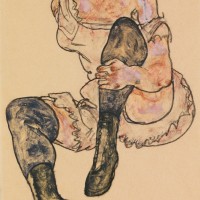 During the first week of November, two works by Egon Schiele sold at auction—one at Christie’s and one at Sotheby’s. This blog post examines the troubled stories behind these works, the way the two sales unfolded, and what they can teach us about the current state of art restitution efforts.
ATTORNEY: Kate Lucas
During the first week of November, two works by Egon Schiele sold at auction—one at Christie’s and one at Sotheby’s. This blog post examines the troubled stories behind these works, the way the two sales unfolded, and what they can teach us about the current state of art restitution efforts.
ATTORNEY: Kate Lucas
CATEGORIES: Art Exhibitions, Art Market, Auction, Legal Developments, Museums, Nazi-looted Art, Provenance -
In the Arena of Looted and Stolen Art, Spotlight Shifts to Negotiated, Voluntary Repatriation and Restitution
06/06/2014
 When it comes to claims involving allegedly looted or stolen art and cultural property, high-profile (and high-stakes) litigation often takes center stage. But the art world is paying increased attention to the rise of voluntary, negotiated repatriation and restitution of works to claimants. This option can lead to productive and mutually beneficial dialogues, partnerships, and outcomes; it also requires careful planning and legal advice.
-
With City in Bankruptcy, a Museums Fate May Hang in the Balance
08/09/2013
 On July 18, the city of Detroit, Michigan filed for bankruptcy. Since the mid-1950s, only about 60 municipalities have filed under Chapter 9, the bankruptcy proceeding used by municipalities—and of those, Detroit’s is by far the largest municipal bankruptcy filing (in terms of debt) in American history. The exact amount the city owes is unclear, but estimates range from $18 billion to $20 billion. The bankruptcy process will be rife with complex issues, including whether the city is truly eligible for bankruptcy, whether public employees and retirees will need to accept a reduction in their expected employment and retirement benefits, and how best to move Detroit forward in a way that will stimulate growth and long-term stability.
-
Thefts Highlight Security Vulnerabilities at Libraries and Archives
07/31/2013
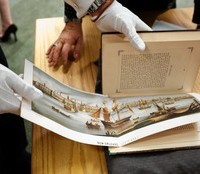 Two recent criminal investigations illustrate the security challenges faced every day by libraries, record depositories, and other collections of books and documents. For reasons discussed below, institutions exploring security options for their archival collections should consult both legal counsel and security experts who can help formulate a strategy that makes sense for an institution’s unique needs.
-
Cleveland Museum of Art Cancels Planned Exhibition of Sicilian Art: A Cautionary Tale About Art Loans
07/15/2013
 A few weeks ago, we discussed tensions between Sicilian cultural officials and two American museums regarding an exhibition of ancient artworks and artifacts from Sicily. The works have been on display at the Getty Villa in Malibu, California, and they were scheduled to travel to the Cleveland Museum of Art in September—until Sicilian officials decided that the ongoing loan of some of the most prominent works was damaging Sicily’s tourism trade. The complaints threw a wrench into the planned exhibits, particularly as there was no signed contract governing the terms of the overseas loans of artworks from Sicily to the two museums.
-
Major Exhibition of Sicilian Antiquities Highlights Reasons Not To Lend (Or Borrow) Works In The Absence Of A Contract
06/25/2013
 This spring, the Getty Villa in Malibu, California introduced an exhibition of remarkable ancient works from Sicily. The exhibit, titled “Sicily: Art and Invention between Greece and Rome,” features works ranging from rare coins to engraved battle gear; together, the works speak to Sicily’s unique role as a crossroads and center of artistic innovation in the classical world. The Getty exhibition closes in August, after which the works were scheduled to be displayed at the Cleveland Museum of Art this fall. The Getty spent nearly $1 million to mount the show, which the New York Times has called “the first major survey of ancient Sicilian art in the United States.”
-
Museums Weigh Competing Interests When It Comes to Digital Images
06/06/2013
 As discussed in a recent New York Times article, museums around the world are reevaluating their approach to distributing images of their collections in an increasingly digital world.
-
The Met To Return Two Pieces Of Ancient Khmer Art To Cambodia
05/08/2013
 After months of negotiations between the Metropolitan Museum of Art and Cambodian officials, the Met has decided to return to Cambodia two 10th-century Khmer statues that had been improperly removed from the Koh Ker temple complex and then smuggled out of the country during the 1970s. The two sandstone statues, known as the Kneeling Attendants, had stood prominently at the entrance to the museum’s Southeast Asian galleries since 1994.
-
D.C. Circuit Revives Claims Seeking Return Of Nazi-Seized Art
04/23/2013
 The D.C. Circuit ruled recently that the heirs of a legendary Hungarian art collector could proceed with their claims against Hungary to recover eleven works seized by the Nazis notwithstanding a Hungarian court ruling to the contrary. See De Csepel v. Republic of Hung., 2013 U.S. App. LEXIS 7837 (D.C. Cir. April 19, 2013). This decision highlights the many legal issues—and obstacles—involved in cases seeking the return of art stolen during World War II.
Art Law Blog