
-
University of Oklahoma Reaches Settlement With Claimant Over Nazi-Confiscated Pissarro Painting
04/01/2016
 After a long legal battle in multiple federal courts, the University of Oklahoma has reached a settlement regarding a claimant’s attempts to recover a Nazi-looted artwork by celebrated Expressionist painter Camille Pissarro.
We have previously written about this case, which involves a claim by 75-year-old Leone Meyer, who says that the painting, La Bergère Rentrent des Moutons (“Shepherdess Bringing in Sheep”), was stolen from her family by the Nazi regime during World War II. -
In New Lawsuit, Heirs of Dachau Victim Seek Return of Two Schiele Works
12/09/2015
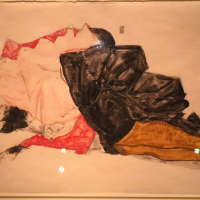 Around this time last year, our blog wrote about the history of two works by Austrian Expressionist Egon Schiele. Both were once owned by Fritz Grünbaum, a Jewish Austrian cabaret performer and art collector who was imprisoned by the Nazis in 1938 and died in Dachau in 1941; it’s unclear what happened to his art during and immediately after World War II, but a handful of the works have surfaced over the years since, sometimes leading to competing claims of ownership.
ATTORNEY: Kate Lucas
Around this time last year, our blog wrote about the history of two works by Austrian Expressionist Egon Schiele. Both were once owned by Fritz Grünbaum, a Jewish Austrian cabaret performer and art collector who was imprisoned by the Nazis in 1938 and died in Dachau in 1941; it’s unclear what happened to his art during and immediately after World War II, but a handful of the works have surfaced over the years since, sometimes leading to competing claims of ownership.
ATTORNEY: Kate Lucas
CATEGORIES: Art Market, Fine Art, Legal Developments, Nazi-looted Art, Provenance -
Controversy Over Jewish Archives Continues, As Court Enters $43.7 Million Interim Judgment Against Russia
09/28/2015Back in 2013, this blog discussed the ongoing litigation—and resulting international controversy—over a famous collection of religious books and manuscripts related to the heritage of Chabad-Lubovitch, a Hasidic Jewish organization founded in Russia and now based in New York. The Russian government, who has control of the collection, has refused to participate in the litigation. This month, the matter took on new weight as a federal court granted the Chabad-Lubovitch claimants’ request for an interim judgment against the Russian government—to the tune of over $40 million.
-
District Court Rules Against Claimants To a Pissarro Work Looted By Nazis
07/06/2015
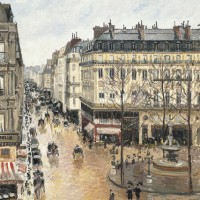 This blog has covered many recent stories involving Nazi-looted artworks. In early June, the U.S. District Court for the Central District of California ruled on the choice of law to be applied to one such dispute, and in the process dealt a blow to the claimants who were seeking the return of a long-lost artwork. The case highlights the difficulty of litigating these disputes that not only span decades of time, but also cross borders, jurisdictions, and legal regimes.
-
One of the First Restituted Works from Gurlitt Collection to be Sold
05/29/2015
 This blog has previously covered the twisting tale of the Gurlitt Collection, a cache of hundreds of artworks discovered in Germany and Austria a few years ago in the possession of Cornelius Gurlitt, the son of an art dealer authorized by the Nazis to deal in art confiscated, looted, or deemed “degenerate art” by Hitler’s regime. The art world has fiercely debated the best way to handle the collection, a daunting task that was further complicated when Gurlitt himself died last May and bequeathed his entire estate to the Kunstmuseum Bern in Switzerland.
-
Suit Over Nazi-Confiscated Pissarro Painting Heads from New York to Oklahoma, As Oklahoma Legislators Put Pressure on University
05/27/2015
 Recent months have seen interesting developments in a federal lawsuit against the University of Oklahoma to recover an allegedly Nazi-looted painting by famed Expressionist Camille Pissarro. 75-year-old Leone Meyer claims that Nazis stole the painting, Pissarro’s “La Bergère Rentrent des Moutons” (“Shepherdess Bringing in Sheep”), from her family during World War II. The Jewish family owned a significant stake in Galeries Lafayette (a high-end Paris department store) and had an extensive art collection.
-
Gurlitt’s Bequest to Kunstmuseum Bern Upheld; Ongoing Task of Handling Restitution Claims Remains
04/07/2015
 This blog, along with the rest of the art world, has followed the twists and turns in the strange story of the Gurlitt Collection, a staggering trove of well over 1,000 artworks amassed by German art dealer Hildebrand Gurlitt during the Nazi era. Our earlier posts review the matter in more detail, but in short, Gurlitt was one of only a few dealers authorized by Nazi leaders to trade in what the Nazis called “degenerate” works of art confiscated or looted by the Nazis; he likely handled works that were looted from persecuted individuals or purchased via duress sales, as well as “degenerate” works removed from German museums to be sold abroad.
-
Litigation Continues Over Nazi-Confiscated Cranach Diptych: Claims Remanded to District Court
01/26/2015
 Federal courts continue to grapple with claims involving a diptych—two painted panels titled Adam and Eve, painted by the famed German Renaissance painter Lucas Cranach the Elder. The works are currently in the collection of the Norton Simon Museum in Pasadena, California, but plaintiff Marei Von Saher claims she is their rightful owner. The case’s history is nearly as convoluted as the history of the artworks—the matter has already made two trips to the Ninth Circuit Court of Appeals, plus two unsuccessful appeals to the Supreme Court—and the courts must grapple with complex threshold considerations before they can even reach the merits of Von Saher’s claims.
-
A New Chapter Begins for the Gurlitt Collection
12/09/2014
 This blog has previously covered the strange ongoing saga of the “Gurlitt Collection”—a spectacular trove of well over 1,000 artworks amassed by German art dealer, Hildebrand Gurlitt, during the Nazi era. Gurlitt was one of only a few dealers authorized by Nazi leaders to trade in “degenerate” works of art that had been confiscated or looted by the Nazis. After World War II, the Gurlitt family claimed that their artworks had been destroyed during the bombing of the German city of Dresden.
-
As Two Schieles Sell at November Auctions, Debate Continues Over Holocaust-Era Restitution Issues
12/02/2014
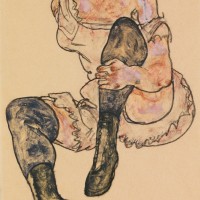 During the first week of November, two works by Egon Schiele sold at auction—one at Christie’s and one at Sotheby’s. This blog post examines the troubled stories behind these works, the way the two sales unfolded, and what they can teach us about the current state of art restitution efforts.
ATTORNEY: Kate Lucas
During the first week of November, two works by Egon Schiele sold at auction—one at Christie’s and one at Sotheby’s. This blog post examines the troubled stories behind these works, the way the two sales unfolded, and what they can teach us about the current state of art restitution efforts.
ATTORNEY: Kate Lucas
CATEGORIES: Art Exhibitions, Art Market, Auction, Legal Developments, Museums, Nazi-looted Art, Provenance -
Germany Takes Steps to Promote Transparency in Gurlitt Case
11/18/2013
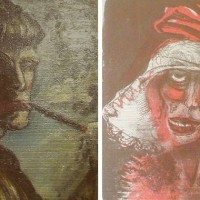 Amid criticism from groups representing Holocaust victims and their heirs and growing international pressure to disclose more information about the cache of art found in the apartment of Cornelius Gurlitt, Germany has announced that it will speed provenance research of the artworks, as well as begin to publish online details about the works.
-
Trove of Nazi-looted Art Discovered in Munich Apartment, But Questions Remain
11/05/2013
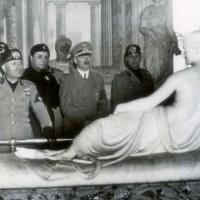 In September 2010, aboard a train from Switzerland, German customs agents were carrying out a routine check when they approached Cornelius Gurlitt. The man, who seemed nervous, was in possession of 9,000 euros and was not registered with the police—which is mandatory in Germany. Officials issued a search warrant for his Munich apartment, expecting to find undeclared euros or evidence of questionable bank accounts.
-
Dealers' Heirs Seek Restitution of Bode Museum's Guelph Treasure
10/15/2013
 At the center of one of Germany’s largest restitution claims is the Berlin portion of the Guelph Treasure, a trove of ecclesiastical art, largely comprised of gem-encrusted reliquaries and crosses, dating from the 11th through 15th centuries. The hoard of precious objects was originally housed in the Braunschweig cathedral, and in 1671 it passed into the hands of the princely House of Guelph.
-
Israel Museum Restitutes Important Nazi-Looted Liebermann Landscape
06/10/2013
 In 1941, Max Liebermann’s landscape masterpiece, Garden in Wansee (1923) was seized by the Einsatzstab Reichsleiter Rosenberg, a Nazi art-confiscation agency, from the collection of Jewish businessman, Max Cassirer. Recently, the Israel Museum in Jerusalem announced that it had restituted the painting to Cassirer’s heir. As per the settlement, the Museum returned the painting to the heir and then re-acquired it, allowing it to remain in the Museum’s collection, accessible to the public.
-
Citing Museums Greater Interest, Dutch Commission Rejects Heirs Claims To Nazi Looted Works
05/13/2013
 In 1933, Jewish industrialist Richard Semmel sold four paintings at auction under duress as a result of Nazi persecution. Now, the Dutch Restitutions Committee, which can give binding opinions in matters of disputed art, has rejected claims by Semmel’s heirs for three of the four paintings.
-
D.C. Circuit Revives Claims Seeking Return Of Nazi-Seized Art
04/23/2013
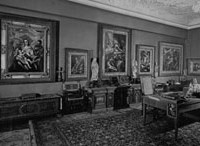 The D.C. Circuit ruled recently that the heirs of a legendary Hungarian art collector could proceed with their claims against Hungary to recover eleven works seized by the Nazis notwithstanding a Hungarian court ruling to the contrary. See De Csepel v. Republic of Hung., 2013 U.S. App. LEXIS 7837 (D.C. Cir. April 19, 2013). This decision highlights the many legal issues—and obstacles—involved in cases seeking the return of art stolen during World War II.
Art Law Blog